
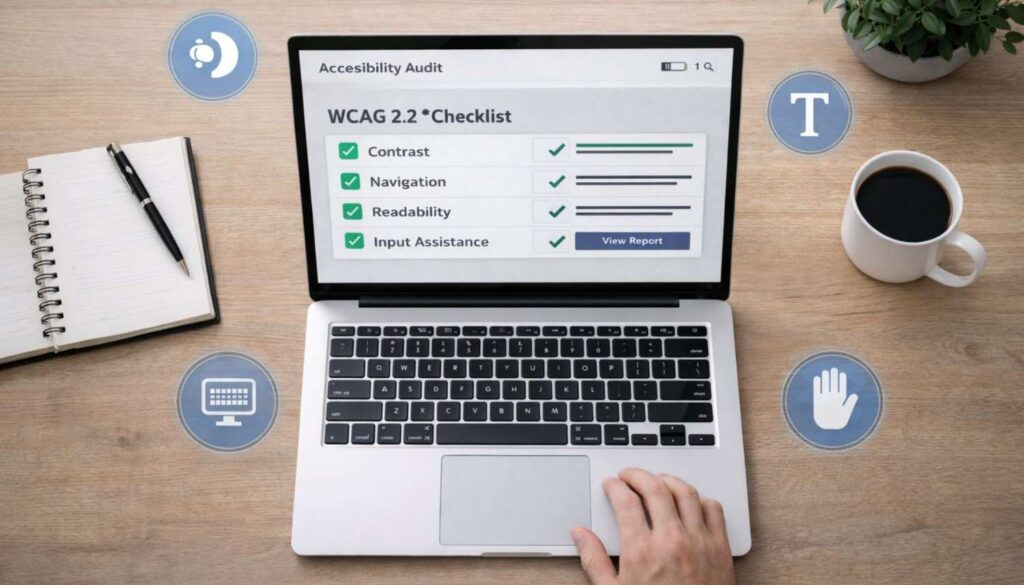
In 2026, websites are no longer just digital brochures. They are storefronts, service desks, learning platforms, and customer support systems all rolled into one. Yet many businesses still overlook a critical part of what makes these platforms truly effective: accessibility. A website that is difficult to read, navigate, or interact with excludes large groups of users and quietly undermines business growth. WCAG 2.2 exists to prevent that, and today it plays a far more important role in both user experience and SEO than most people realize.
What Is WCAG 2.2 In Simple Terms?
WCAG stands for the Web Content Accessibility Guidelines. These are international standards created to ensure that websites can be used by people with different abilities, including those with visual, hearing, motor, and cognitive impairments. The goal is simple: everyone should be able to access information, use features, and complete tasks on a website without unnecessary barriers.
WCAG 2.2 is the latest version of these guidelines. It builds on earlier standards by addressing how people use modern websites, especially on mobile devices and touch screens. It includes updates that improve navigation for users who rely on keyboards or assistive technologies, make interactive elements easier to use, and ensure that important content is not hidden or difficult to reach.
These standards apply to any organization that has a public-facing website, whether it is a small business, a startup, or a large enterprise. As more services move online, WCAG 2.2 matters because it defines what a fair, usable, and inclusive web experience should look like in today’s digital world.
Why Accessibility Is No Longer Optional?
For many years, accessibility was treated as a nice-to-have feature, but that mindset no longer applies. Governments and regulatory bodies across the world are now enforcing stricter digital accessibility standards, making it mandatory for websites and online platforms to be usable by everyone. Businesses that fail to comply face growing legal and financial risks, especially in high-impact industries such as e-commerce, education, healthcare, and finance.
Accessibility is also directly connected to market reach. A large portion of the global population lives with some form of permanent disability, while millions more experience temporary or situational limitations, such as using a phone in bright sunlight, navigating a site with one hand, or relying on assistive technologies. An accessible website ensures none of these users are excluded from your digital experience.
In addition, accessibility plays a powerful role in building brand trust. When visitors can easily read your content, understand your offerings, and complete actions without confusion or frustration, they naturally view your brand as more professional, reliable, and customer-focused. Websites that remove barriers create smoother journeys, and smoother journeys lead to higher engagement and better conversions.
Key reasons accessibility is now essential:
- Legal and compliance protection against accessibility-related lawsuits and penalties
- Wider audience reach across users with disabilities and situational limitations
- Stronger brand credibility through inclusive, user-friendly design
- Higher conversions by eliminating friction from the user experience
In today’s digital landscape, accessibility is no longer optional it is a core requirement for sustainable growth, trust, and performance.
How UI/UX and Accessibility Work Together?
UI/UX design and accessibility are deeply connected. Good UI/UX focuses on making websites intuitive, efficient, and enjoyable to use. Accessibility ensures that this experience works for everyone, not just those with perfect vision, hearing, or motor control.
When accessibility is built into UI/UX, websites become easier to navigate, text becomes easier to read, and interactive elements become easier to use. Clear layouts, consistent navigation, and well-designed controls help all users, including those using screen readers, keyboards, or voice commands.
WCAG 2.2 directly influences how real people experience your website. It guides designers and developers toward choices that reduce confusion, prevent errors, and support different ways of interacting with digital content. In practical terms, this means fewer abandoned forms, fewer missed clicks, and more satisfied users.
Are you enjoying reading this blog post?
If you’re interested in having our team handle your marketing needs, please click here
Accessibility’s Impact on SEO
Accessibility and SEO now go hand in hand. Search engines aim to deliver the best possible experience to users, and accessible websites align closely with that goal. When a site follows WCAG guidelines, it tends to have cleaner structure, clearer content, and better-defined elements, all of which help search engines crawl and understand pages more effectively.
Accessible websites also keep users engaged for longer. When visitors can easily read text, navigate menus, and interact with features, they are more likely to stay, explore, and take action. This leads to lower bounce rates and higher engagement, both of which are important signals for search rankings.
This is why many modern SEO agencies in India now treat accessibility as a core part of optimization. A professional SEO company in India that ignores WCAG standards risks leaving both users and search engines dissatisfied, which ultimately affects visibility and growth.
Common WCAG 2.2 Violations on Websites
Despite the clear benefits, many websites still fail basic accessibility checks. The most common issues include:
1. Poor color contrast
- Text becomes difficult to read for users with low vision
- Creates problems on mobile screens and in bright environments
2. Missing alt text on images
- Screen readers cannot describe images to visually impaired users
- Important visual content becomes invisible
3. Keyboard-inaccessible navigation
- Users who cannot use a mouse are unable to browse
- Menus, buttons, and links become unusable
4. Unclear or broken forms
- Missing labels confuse screen reader users
- Lack of error messages causes frustration and form abandonment
5. Mobile accessibility problems
- Buttons are too small to tap
- Layouts are crowded and difficult to navigate
- Text does not scale properly
6. SEO and performance impact
- Higher bounce rates
- Lower user engagement
- Search engines struggle to understand page structure
Fixing these WCAG 2.2 violations is not just about compliance; it’s about building a website that works for every user and performs better in search.
The Future of Web Accessibility
Web accessibility standards will continue to become stricter as more of life moves online. Governments are pushing for greater inclusion, and search engines are prioritizing user-friendly, well-structured websites. Businesses that act now will be better prepared for these changes and will build a stronger foundation for long-term digital growth.
WCAG 2.2 is not just about avoiding penalties. It is about creating websites that reach more people, earn more trust, and perform better in search. Companies that embrace accessibility today will have a clear advantage as expectations rise.
Brands looking for the best SEO service providers in India are increasingly recognizing that ethical, user-first design is not separate from performance. It is a key part of it. At Magnarevo, we see accessibility as an essential element of responsible, future-ready digital growth, helping businesses create experiences that are both inclusive and optimized for the way people and search engines use the web.
About Author

Raised in India, I earned a Masters in Marketing from Swinburne University. Initially in Sales, I pivoted to Digital Media in 2013. Now, as the driving force behind Magnarevo, I leverage my expertise to guide branding and marketing, leading our sales and marketing teams. Keen on collaborations, I guide businesses to elevate their digital presence. Reach out at karan@magnarevo.com. Specialities: Branding, marketing strategy, digital media, ad management, website development, and analytics.